




 9/30/2026 7:50:46 AM
 58
58Excerpt
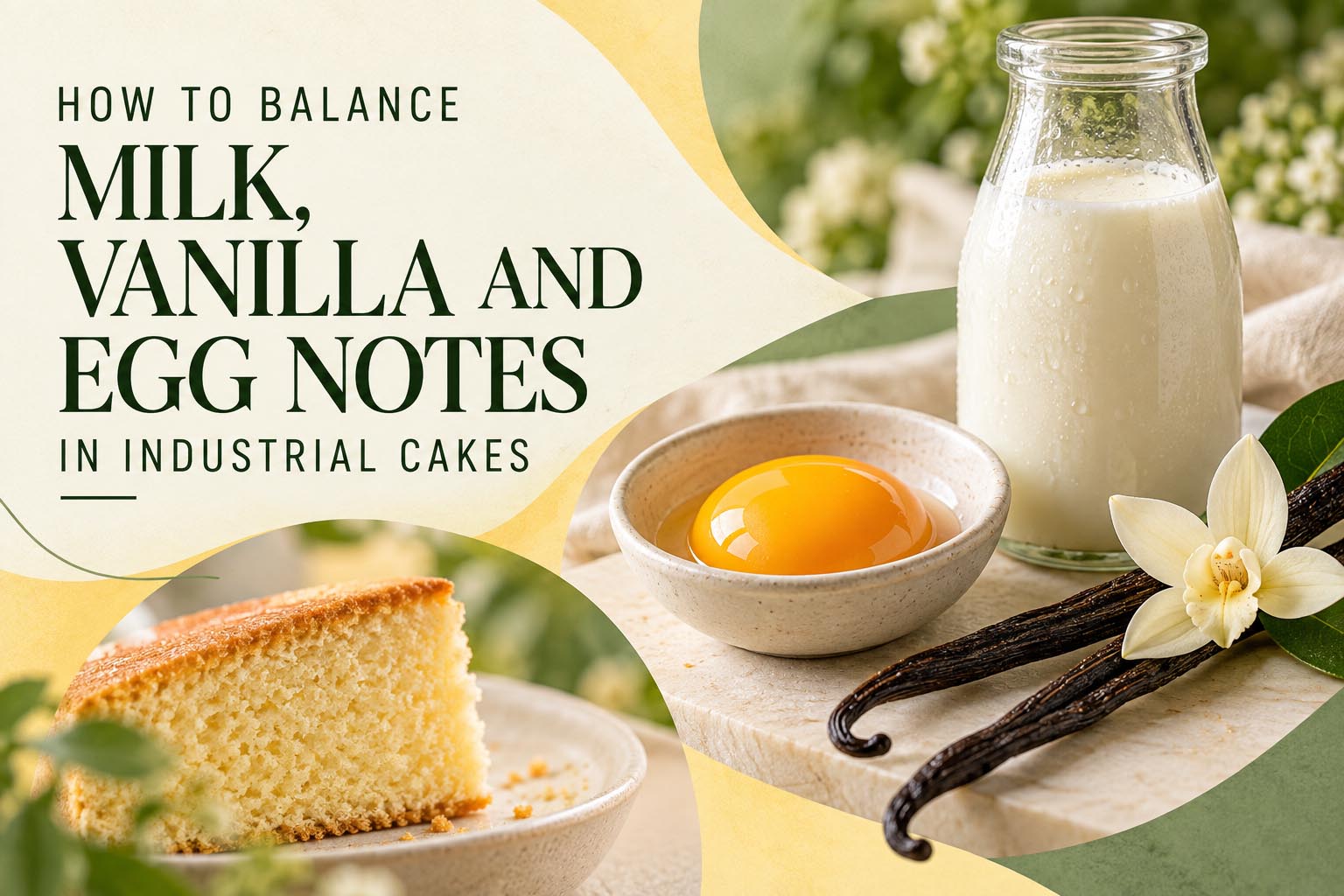
Milk, vanilla and egg notes form much of the familiar flavor of industrial cakes, but simply increasing all three rarely produces a better result. This article explains how the cake formula, baking process, filling and storage conditions influence their balance—and why evaluation must continue beyond the raw batter.
Introduction
Milk, vanilla and egg are among the most familiar flavor directions in industrial cakes. They appear in sponge cakes, Swiss rolls, layer cakes, filled cakes, cupcakes and many individually wrapped products. Because these notes are so common, it is easy to assume that balancing them is straightforward: add enough milk flavor for creaminess, a little vanilla for sweetness and an egg note for authenticity.
In practice, the relationship is more complex. A cake can contain recognizable milk, vanilla and egg notes and still feel unbalanced. The milk character may be rich at first but become heavy after several bites. Vanilla may make the aroma pleasant while covering the identity of the dairy profile. An egg note may support a freshly baked impression at a moderate level but become sulfurous or fatty when it dominates. The same flavor combination may also perform differently after baking, cooling, filling and several weeks in a sealed package.
The goal is therefore not to make every note strong. It is to create a coherent profile in which the cake base, added flavors and processing aromas support one another.
Egg Is Part of the Cake's Aroma Structure
Egg contributes far more than color, aeration and texture. During baking, egg components participate in reactions that help create the characteristic aroma of sponge cake. Research on cake volatiles has shown that changing or removing egg can alter both the composition of key aroma compounds and the way added aromas are released from the finished cake.
This is why an egg note should not automatically be treated as an off-note. In a plain sponge cake or Swiss roll, a moderate egg character can make the product feel fuller and more recognizable as cake. If it is removed too aggressively, the result may smell sweet and milky but also flat, artificial or disconnected from the baked base.
However, the character of the egg material matters. Fresh whole egg, egg yolk, egg white and egg powder do not create identical sensory results. Their contribution can also change with dosage, storage and heat treatment. In some formulas, the desired impression is a warm baked-egg background. In others, especially delicately flavored milk cakes, an excessive fatty, sulfurous or lingering egg note can interfere with the intended clean dairy profile.
The first step is therefore to identify what the existing cake base already provides. A flavor system should reinforce the useful baked-egg character while avoiding unnecessary duplication of the heavier notes.
Vanilla Is More Than a Covering Flavor
Vanilla is often used when an industrial cake has an obvious egg odor or when the milk profile feels incomplete. It can be effective, but describing vanilla only as a masking flavor misses its broader role.
Vanilla can connect sweetness, dairy character and baked notes. At an appropriate level, it can make a milk profile feel rounder, soften the transition between crumb and filling and support the perception of sweetness. This is particularly useful in reduced-sugar formulations, where the aroma may need to contribute more to the overall sweet impression.
At the same time, vanilla has a strong identity. If the dosage is too high or the vanilla profile is too dark, woody or confectionery-like, the finished product can shift from “milky cake” to “vanilla cake.” The consumer may notice vanilla first and fail to perceive the intended fresh-milk or cream character. A heavy vanilla note can also combine with sugar and fat to create a cloying impression in long-shelf-life products.
The right choice depends on the product. A light, clean vanilla can support a fresh milk cake. A warmer, slightly cooked vanilla direction may work better with butter cake or a caramelized crust. A rich confectionery vanilla may suit a sweet cream filling but be too dominant in a delicate sponge.
Vanilla should therefore be selected for its function within the profile, not simply added as a universal solution to egg odor.
“Milky” Is Not One Single Direction
Milk flavor can refer to several different sensory ideas: fresh milk, sweet cream, cooked milk, condensed milk, butter, milk powder or a creamy confectionery note. Each one creates a different relationship with vanilla and egg.
A fresh-milk direction usually works best when the cake base is relatively clean and the product aims for a light, soft impression. It can be easily overshadowed by strong vanilla, dark crust aroma or a pronounced egg note. A cooked-milk or milk-powder direction is often more compatible with the heated character of packaged cakes because it connects naturally with baking. Sweet cream can add fullness, while butter notes can strengthen richness and the perception of fat.
However, richness has a limit. Combining a strong butter note, sweet vanilla and a heavy egg-yolk character may produce an intense first impression, but it can quickly become greasy or tiring. In contrast, using only a light fresh-milk note in a high-fat cake may result in a profile that disappears after baking or lacks enough weight to match the texture.
The dairy direction should be chosen after considering the product's fat level, sweetness, baking color, filling and target positioning. The question is not simply “How can we add more milk aroma?” but “What kind of milk impression belongs in this cake?”
The Formula Changes What Consumers Perceive
Flavor balance cannot be separated from the cake matrix. Sugar, fat, water, flour, egg and emulsifiers influence aroma retention and release as well as texture and taste.
Fat can hold certain aroma compounds and change when they are released during eating. It also increases richness, which can make butter and cream notes feel more natural—but may intensify heaviness if the dairy flavor is already dense. Water content and crumb structure affect how quickly aroma reaches the nose. A soft, moist sponge may release aroma differently from a compact pound cake. Sugar contributes not only sweetness but also balance: reducing it can expose egg, cereal or bitter notes that were previously less obvious.
Baking adds another layer. The crust and crumb do not experience the same temperature or moisture conditions, so they do not develop identical aromas. Browning reactions can produce desirable roasted, caramelized and baked notes, while volatile components added to the batter may be partly lost during heating. Baking time and oven conditions can therefore shift the balance even when the formula and flavor dosage remain unchanged.
For this reason, smelling the batter is not a reliable prediction of the finished cake. A batter with a vivid milk and vanilla aroma may produce a surprisingly weak cake after baking. Conversely, a batter that seems only moderately flavored can develop a fuller profile once the baked notes are formed.
Different Industrial Cakes Need Different Priorities
Sponge Cakes
In a plain sponge cake, the crumb is light and the egg contribution is often easy to perceive. A clean milk note can soften the egg character, while a restrained vanilla note connects the sweetness and baked aroma. If all three are too strong, the delicate crumb can seem overloaded. The best profile is usually clear but not heavy, with egg supporting the identity of the cake rather than becoming the main aroma.
Swiss Rolls
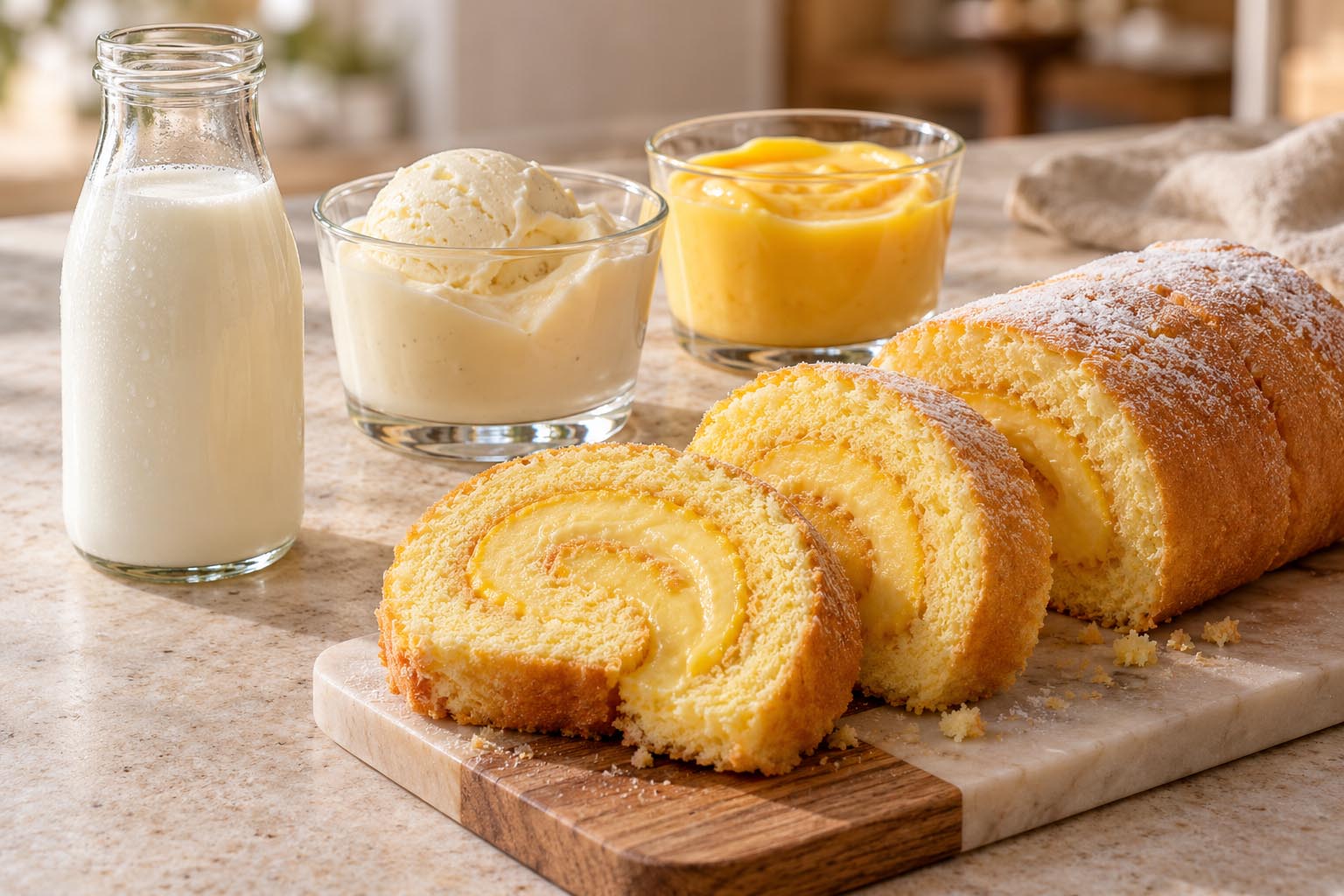
A Swiss roll combines cake and filling, so balance must be evaluated in the complete product. A cream filling can supply most of the dairy impact, meaning the sponge may need only enough milk and vanilla character to connect with it. If the cake and filling both contain strong sweet-cream and vanilla notes, the finished roll may become monotonous. A slightly cleaner cake profile can create contrast and improve repeat eating.
Filled and Layer Cakes
In filled cakes, the flavor must work across different moisture and fat phases. The filling may release vanilla or cream aroma quickly, while the crumb provides baked and egg notes during chewing. The objective is not necessarily to make both components taste identical. A coordinated profile can use the filling for immediate creamy impact and the cake for a warm baked finish.
Individually Wrapped Cakes
Packaged cakes require another stage of evaluation. After sealing, volatile compounds redistribute between the cake, filling and package headspace. The aroma perceived when the package is opened may differ from the flavor experienced during eating. Over time, oxidation and moisture migration can also change the balance. A profile that seems clean on the first production day may become heavier, flatter or more egg-forward later in the shelf life.
This does not mean flavor can replace suitable packaging, antioxidant strategy or shelf-life control. It means flavor selection must be tested within the same packaging and storage conditions intended for the commercial product.
A Practical Way to Build the Profile
A more reliable development process begins with the unflavored base. The team should first evaluate its natural egg aroma, sweetness, fat impression, crust character and any undesirable aftertaste. This establishes what the flavor system actually needs to change.
Next, define the target dairy direction in sensory terms. “Milky” is too broad for useful development. Is the goal fresh and light, sweet and creamy, cooked and comforting, buttery and rich, or similar to milk powder? The answer determines how the dairy note should interact with vanilla and the existing cake aroma.
The three directions should then be adjusted independently through small trials. One trial may reduce vanilla while keeping the milk level constant. Another may change the dairy profile rather than its total dosage. A third may retain some baked-egg character instead of trying to cover it completely. Comparing controlled variations makes it easier to understand which component is causing heaviness, thinness or loss of identity.
Evaluation should take place at several points:
in the batter, to observe the starting profile;
after baking and complete cooling, when the finished crumb has formed;
after filling or coating, to assess interactions between components;
after packaging, to check the opening aroma;
during the intended shelf life, to monitor changes in balance and aftertaste.
The complete product should also be eaten, not only smelled. A cake may have an attractive opening aroma but feel cloying after two or three bites. Another may smell moderate but release a pleasant milk and vanilla profile during chewing. Both orthonasal aroma and in-mouth flavor release matter to consumer experience.
Balance Comes From the Finished Product
Milk, vanilla and egg notes are not three separate switches that can be turned up until the cake smells strong enough. They interact with one another and with the formula, baking process, filling, package and storage period.
A successful industrial cake usually retains enough egg and baked character to feel authentic, enough vanilla to connect sweetness and round the profile, and the right type of dairy note to deliver the intended identity. The exact balance cannot be decided from a flavor sample alone, nor can one ratio be applied to every cake.
At Liangdun, bakery flavor selection can be supported through testing in the customer's actual or representative product base. By comparing controlled prototypes after baking, filling and storage, it becomes easier to identify whether the product needs a cleaner milk top note, a fuller cream body, a softer vanilla bridge or better control of the existing egg character. The final judgment should always be made in the finished cake that consumers will open and eat.